
Guide
The difference between a team push and a solo push in COD Mobile is not just how many players move forward. It is whether the fight is built around timing, information, trades, and a shared win condition. In competitive gaming, coordination usually turns dangerous entries into winnable fights.
What Team Push vs Solo Push Really Means
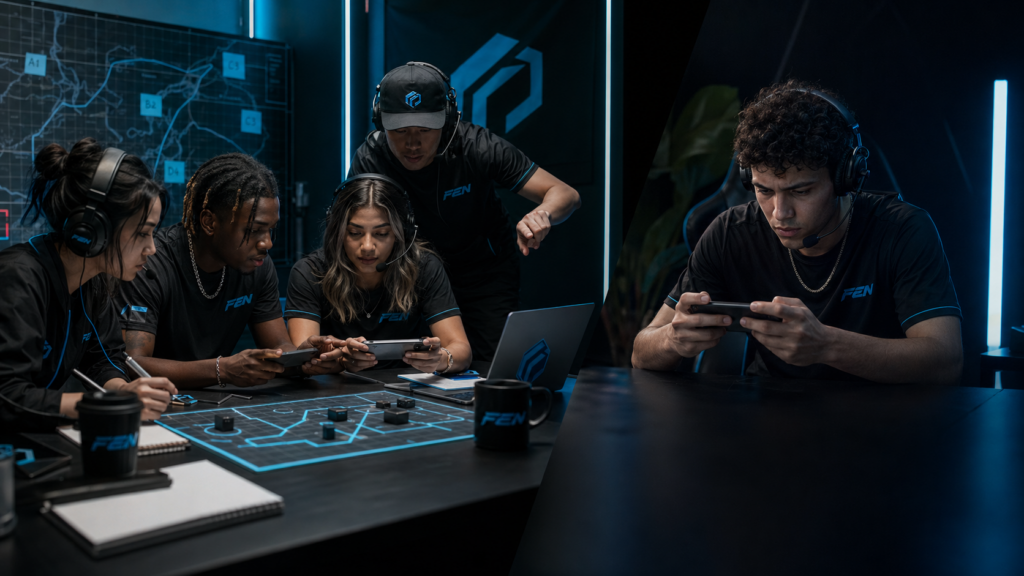
A team push is a coordinated attack on a lane, room, hill, bomb site, or power position. Players move with a shared target, use callouts, enter close enough to trade, and understand who is first contact, who follows, and who protects the objective after the fight.
A solo push is one player taking space alone. Sometimes that is a mistake. Sometimes it is a planned pressure play. The difference is intent. A smart solo push gathers information, forces rotation, creates timing pressure, or opens a flank. A bad solo push is just an isolated fight the team cannot recover.
Why Team Pushes Win More Fights
In organized COD Mobile scrims, defenders are rarely surprised by one player running into a common angle. They pre-aim lanes, hold crossfires, listen for pressure, and punish predictable routes. A team push makes that defense harder because it compresses timing and creates multiple threats at once.
Trades become realistic
The second player can finish the fight before the defender resets, reloads, or escapes. Even when the entry dies, the team can still win the exchange.
Angles get overloaded
One defender can hold one clean angle. A coordinated push forces them to choose between targets, reposition, or rely on help.
Utility has purpose
When players move together, grenades, tacticals, shoulder peeks, bait shots, and pressure calls support the same fight instead of happening randomly.
Objective play is cleaner
A successful team push does not stop at eliminations. It converts the fight into hill time, bomb control, spawn pressure, or a safer rotation.
When a Solo Push Makes Sense
Solo pushes are not automatically wrong. Competitive teams still need individual initiative. The problem is when players use solo pushes as ego challenges instead of controlled decisions. A good solo push has a reason, a timing window, and a recovery plan if the fight goes badly.
Information play. A player shoulder-peeks, checks a route, or pressures a lane to confirm where opponents are stacked before the team commits.
Timing flank. A player attacks a weak side while the rest of the roster creates noise elsewhere. The goal is disruption, not a highlight chase.
Spawn or rotation pressure. One player takes space early so the team can rotate, set up, or slow the opponent before the next objective unlocks.
Low-risk cleanup. A player chases a weak opponent only when the team has numbers, the route is known, and the objective is not being abandoned.
A solo push should be called before or during the move. If the team finds out only after the player dies, it was probably not a team decision.
Common Mistakes That Lose Fights
Most failed pushes are not caused by one missed shot. They come from broken spacing, late calls, unclear roles, and players entering fights at different speeds. These mistakes show up quickly in scrims because organized opponents know how to punish isolated timing.
How to Call a Better Team Push
Good pushes do not need complicated language. They need short calls everyone understands before the fight begins. The call should name the target area, the entry timing, the first player in, the trade player, and what the team does after the fight.
Call the target, count the timing, and confirm who is trading. Keep it simple: group, stun, entry, trade, clear, then hold.
Call enemy count, weak status, exact position, and whether the team should flood, slow down, or rotate away from the fight.
Convert the fight. Take hill time, set crossfires, plant or defend the bomb, block spawns, or stabilize for the next wave.
Scrim Drills for Cleaner Pushes
Team push vs solo push habits improve fastest when rosters isolate them in practice. Do not wait for tournament pressure to discover that spacing is broken. Build the habit in scrims, review it immediately, and hold players accountable without turning every mistake into an argument.
Trade-only review. After each map, mark deaths as traded, untraded, or unnecessary. Patterns will appear quickly.
Two-player entry reps. Practice clearing common rooms and lanes with fixed entry and trade roles until the spacing feels automatic.
Solo push permission rule. Require players to call solo pressure before they take it, then review whether the move helped the team.
Objective conversion check. Track what the team did after winning a push. A clean entry matters less if the objective was left open.
Building Better Competitive Habits
Players, rosters, coaches, and tournament organizers all benefit when teams understand the difference between aggressive play and disconnected play. A player can be fast, confident, and mechanically sharp while still hurting the roster if every push creates an untradeable death.
For coaches and in-game leaders, the goal is not to remove initiative. It is to channel it. Let confident players take space, but make sure the team knows why the move matters, how it connects to the round or hill, and when the player needs support.
FEN is independent and is not affiliated with, endorsed by, sponsored by, or authorized by Activision or the Call of Duty franchise.
Internal Link Suggestions
Connect pushing decisions to scrims, team roles, tournaments, and progression.
Build a COD Mobile practice systemTurn push timing, trade discipline, and review habits into a repeatable routine.
Find and organize scrimsUse structured practice to test team pushes against organized opponents.
Improve roster organizationBuild the team structure needed for cleaner coordination and accountability.
Frontline Esports Network
Practice Pushes With a Real Team Structure
Join FEN for free to connect your competitive habits with scrims, roster organization, tournaments, and a more serious path into structured mobile esports.
Join FEN Free