
Pillar Guide
Ranked play can show mechanical skill, but competitive COD Mobile asks a different question: can five players prepare, communicate, adapt, and perform inside a structured match environment? This complete guide to COD Mobile competitive breaks down scrims, team roles, tournaments, and the progression path from solo ranked habits to organized competition.
What Competitive COD Mobile Really Means
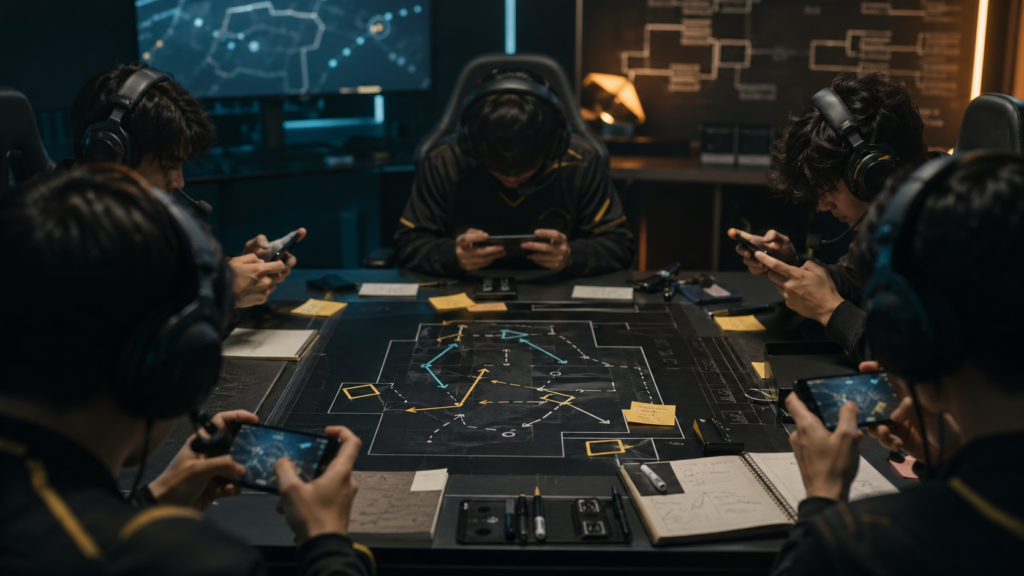
Competitive COD Mobile is not just ranked play with higher stakes. It is a team environment where practice has a purpose, roles are assigned, rules are clear, and every match creates information the roster can use. Players still need aim, movement, map awareness, and mode knowledge, but those skills matter more when they are connected to a shared plan.
In ranked, a player can climb by reacting quickly, taking strong gunfights, and carrying unstable lobbies. In structured competition, the stronger team usually wins because it controls spawns, trades efficiently, rotates early, protects objective time, and communicates under pressure. That shift is the foundation of competitive gaming.
Ranked Play vs Scrims vs Tournaments
Most players enter competitive COD Mobile through ranked, but ranked is only the first checkpoint. Scrims and tournaments add structure that ranked cannot provide on its own.
How Scrims Work
Scrims are organized practice matches between teams. A good scrim is not a random custom lobby. It has a time, opponent, ruleset, map or mode plan, roster list, and a reason for being played. One session might focus on Hardpoint rotations. Another might test Search and Destroy openings, defensive setups, or substitute chemistry.
Set the objective. Decide what the roster is practicing before the match starts. Examples include cleaner trades, earlier rotations, better break timing, calmer late-round calls, or reducing solo pushes.
Confirm the rules. Agree on modes, maps, banned items where relevant, lobby timing, side selection, restarts, substitutions, and how results will be recorded.
Review after the set. Scrims are valuable because they expose patterns. Track what happened, what changed, and what needs to be repeated in the next practice block.
FEN is an independent competitive platform. Game names are used descriptively so players and rosters can understand the competitive context.
Core Team Roles
A competitive COD Mobile roster needs more than five strong players. It needs a team structure that makes decisions easier during pressure. The labels vary between teams, but the responsibilities are usually familiar.
Objective player
Prioritizes hill time, bomb responsibility, captures, and mode-specific progress. This player keeps the win condition in view.
Slayer
Creates pressure through key eliminations, lane control, and aggressive timing. Strong slayers still need to trade and communicate.
Anchor
Controls spawns, holds power positions, and gives the team a stable base for rotations and defensive structure.
Flex
Adjusts to what the map needs: pressure, objective support, passive holds, or mid-round problem solving.
In-game leader
Keeps communication organized, calls adjustments, and helps the roster reset after mistakes without losing tempo.
Substitute
Maintains team availability and protects practice consistency when a starting player cannot attend.
Building a Tournament-Ready Roster
Tournament readiness starts before registration. A roster should know who is playing, who is leading communication, who can substitute, which maps need work, and what rules apply. The teams that handle these basics early avoid avoidable match-day problems.
Keep player names, availability, platform requirements, contact methods, and substitute rules clear. A team that cannot check in cleanly is already under pressure before the first map.
Schedule scrims in blocks, not random bursts. Review losses while details are fresh, then convert them into one or two practice priorities for the next session.
Confirm check-in windows, opponent contact, lobby creation, reporting steps, screenshots, and dispute rules before the event starts.
Progression From Ranked to Competitive
The path into COD Mobile competitive is easier when it is treated as a progression rather than a jump. Players should first use ranked to identify strengths, then join structured practice, then become reliable teammates, then enter tournaments when the roster can handle rules, scheduling, and review.
Stabilize your role. Know whether you are most valuable as an objective player, slayer, anchor, flex, caller, or support piece.
Find consistent teammates. Competitive growth is faster when the same players review the same mistakes and develop shared language.
Play organized scrims. Use practice matches to test plans, build communication habits, and learn how the roster reacts when behind.
Enter suitable tournaments. Start with events that match your roster’s readiness. Treat each bracket as feedback for the next training cycle.
How FEN Supports Structured Competition
Frontline Esports Network is built for players, rosters, coaches, and organizers who want competitive activity to feel less scattered. Instead of relying only on loose messages and last-minute lobbies, teams can build toward clearer scheduling, roster organization, tournament discovery, and repeatable preparation.
For players, that means a cleaner path from interest to team involvement. For rosters, it means better visibility around availability and practice expectations. For organizers, it means stronger participant readiness and fewer avoidable communication gaps.
Internal Link Suggestions
Use this link for readers who want to move from ranked habits into scheduled practice matches.
Point roster-focused readers toward team creation, teammate discovery, and group structure.
Send tournament-ready players toward organized competition and event opportunities.
Start Building a Competitive Routine With FEN
Join Frontline Esports Network for free to organize your competitive gaming activity, connect with players and rosters, prepare for scrims, and build toward tournaments with more structure.
Join FEN FreeFEN is independent and is not affiliated with, endorsed by, sponsored by, or authorized by Activision or the Call of Duty franchise.